
Ursula K. Le Guin
CHANGING PLANES
Stories
AUTHOR’S NOTE
THIS BOOK WAS WRITTEN when the miseries of air travel seemed to be entirely the doing of the corporations that ran the airports and the airlines, without any help from bigots with beards in caves. Spoofing the whole thing was easy. They were mere discomforts, after all. Things have changed, but the principle on which Sita Dulip’s Method is founded remains valid. Error, fear, and suffering are the mothers of invention. The constrained body knows and values the freedom of the mind.
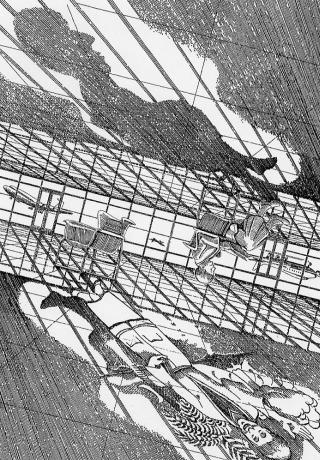
SITA DULIP’S METHOD
THE RANGE OF THE AIRPLANE—a few thousand miles, the other side of the world, coconut palms, glaciers, the poles, the Poles, a lama, a llama, etc.—is pitifully limited compared to the vast extent and variety of experience provided, to those who know how to use it, by the airport.
Airplanes are cramped, jammed, hectic, noisy, germy, alarming, and boring, and they serve unusually nasty food at utterly unreasonable intervals. Airports, though larger, share the crowding, vile air, noise, and relentless tension, while their food is often even nastier, consisting entirely of fried lumps of something; and the places one has to eat it in are suicidally depressing. On the airplane, everyone is locked into a seat with a belt and can move only during very short periods when they are allowed to stand in line waiting to empty their bladders until, just before they reach the toilet cubicle, a nagging loudspeaker harries them back to belted immobility. In the airport, luggage-laden people rush hither and yon through endless corridors, like souls to each of whom the devil has furnished a different, inaccurate map of the escape route from hell. These rushing people are watched by people who sit in plastic seats bolted to the floor and who might just as well be bolted to the seats. So far, then, the airport and the airplane are equal, in the way that the bottom of one septic tank is equal, all in all, to the bottom of the next septic tank.