
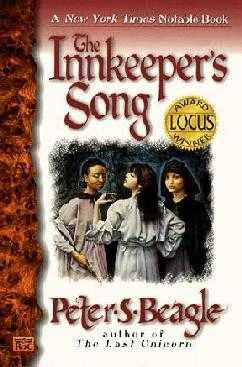
INNKEEPER’S SONG
Peter S. Beagle
FOR PADMA HEJMADI
at last, and for always.
If we were simply friends,
colleagues sharing an art, a language,
a country sketched on restaurant tablecloths,
dayenu—it would have been enough—dayenu
But that we are truly married
is all I know of grace.
“There came three ladies at sundown:
one was as brown as bread is brown,
one was black, with a sailor’s sway,
and one was pale as the moon by day.
The white one wore an emerald ring,
the brown led a fox on a silver string,
and the black one carried a rosewood cane
with a sword inside, for I saw it plain.
They took my own room,they barred the door,
they sang songs I never had heard before.
My cheese and mutton they did destroy,
and they called for wine, and the stable boy.
And once they quarreled and twice they cried—
Their laughter blazed through the countryside,
The ceiling shook and the plaster flew,
and the fox ate my pigeons, all but two.
They rode away with the morning sun,
the white like a queen, the black like a nun,
and the brown one singing with scarlet joy,
and I’ll have to get a new stable boy.”
— The Innkeeper’s Song
PROLOGUE
Once there was a village on a river in a southern country. The people who lived there grew corn and potatoes and a kind of blue-green cabbage, and a tawny climbing fruit that tasted better than it looked. All the roofs leaked in the rainy season—some more than others—and most of the children were lean, though the cows and pigs were not, but no one went very hungry in that village.