
Governor Arthur’s period of office expired in 1836, and he left the colony, greatly to the regret of the colonists, who subscribed £1,500 to present him with a testimonial. He was succeeded by Sir John Franklin, the famous voyager, whose history will be related in a subsequent chapter.
CHAPTER VI.
NEW SOUTH WALES, 1808-1837.
1. Governor Macquarie.—In 1808 the English Government held an inquiry as to the circumstances which had caused the expulsion of Governor Bligh; and though they cashiered Major Johnstone, and indeed ordered the whole of the New South Wales Corps to be disbanded, yet, as it was clear that Bligh had been himself very much to blame, they yielded to the wishes of the settlers in so far as to appoint a new Governor in his place, and therefore despatched Major-General Macquarie to take the position. He was directed to reinstate Bligh for a period of twenty-four hours, in order to indicate that the authorities in England would not suffer the colonists to dictate to them in these matters; but that they reserved completely to themselves the right to appoint and dismiss the Governors. However, as Bligh had by this time gone to Tasmania, Macquarie was forced to content himself, on his arrival, with merely proclaiming what had been his instructions.
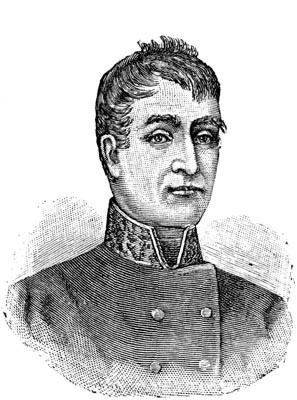
In the early days of the colonies their destinies were, to a great extent, moulded by the Governors who had charge of them. Whether for good or for evil, the influence of the Governor was decisive; and it was, therefore, a matter of great good fortune to Sydney that, during the long administration of Governor Lachlan Macquarie, this influence was almost wholly on the side of good.