
A small vessel, the
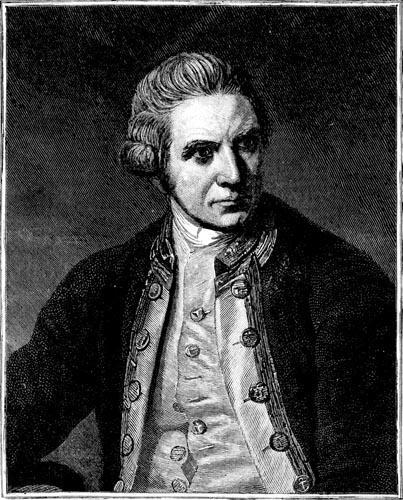
Endeavour, was chosen; astronomers with their instruments embarked, and the whole placed under the charge of James Cook, a sailor whose admirable character fully merited this distinction. At thirteen he had been a shopkeeper’s assistant, but, preferring the sea, he had become an apprentice in a coal vessel. After many years of rude life in this trade, during which he contrived to carry on his education in mathematics and navigation, he entered the Royal Navy, and by diligence and honesty rose to the rank of master. He had completed so many excellent surveys in North America, and, besides, had made himself so well acquainted with astronomy, that the Government had no hesitation in making their choice. That it was a wise one, the care and success of Cook fully showed. He carried the expedition safely to Tahiti, built fortifications, and erected instruments for the observations, which were admirably made. Having finished this part of his task, he thought it would be a pity, with so fine a ship and crew, not to make some discoveries in these little-known seas. He sailed south for a time without meeting land; then, turning west, he reached those islands of New Zealand which had been first seen by Tasman. But Cook made a far more complete exploration than had been possible to Tasman. For six months he examined their shores, sailing completely round both islands and making excellent maps of them.
Then, saying good-bye to these coasts at what he named Cape Farewell, he sailed westward for three weeks, until his outlook man raised the cry of “land,” and they were close to the shores of Australia at Cape Howe.