
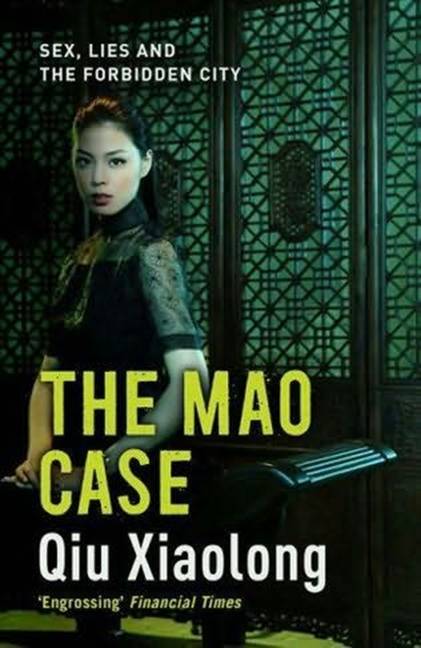
Qiu Xiaolong
The Mao Case
The sixth book in the Inspector Chen series, 2009
For the people that suffered under Mao
ACKNOWLEDGMENTS
I am indebted to many people for their support, particularly to Patricia Mirrlees, whose warm friendship thawed the frozen moments of writing; to Yang Xianyi, whose example of moral integrity inspired the characters in the story; and to Keith Kahla, whose brilliant editorial work helped to present it in its present form.
ONE
CHIEF INSPECTOR CHEN CAO was in no mood to speak at the political studies meeting of the Shanghai Police Bureau’s Party committee.
His mood was due to the topic of the day – the urgency of building spiritual civilization in China. “Spiritual civilization” was a political catchphrase much emphasized in the Party newspapers starting in the mid-nineties. People’s Daily had another editorial on the subject just that morning. In the same issue, however, yet another high-ranking Party official was exposed in a corruption scandal.
So where could the “spiritual civilization” come from? Surely, it wasn’t something that could be pulled out of thin air like a rabbit out of a magician’s hat. Still, Chen had to sit, stiff and serious, at the middle of the conference room table, nodding like a robot, while others talked.
You cannot connect nothing to nothing with broken fingernails…
Whether this bleak image came from a poem he had read long ago, while lying in the sun on some beach, was a detail he couldn’t recall.
In spite of the Party’s propaganda, materialism was sweeping over China. It was a well-known joke that the old political slogan “Look to the future” had become an even more popular maxim, “Look to the money,” for in Chinese, both “future” and “money” are pronounced as qian, exactly the same. But that wasn’t a joke, not exactly. So where would the “spiritual civilization” come from?