
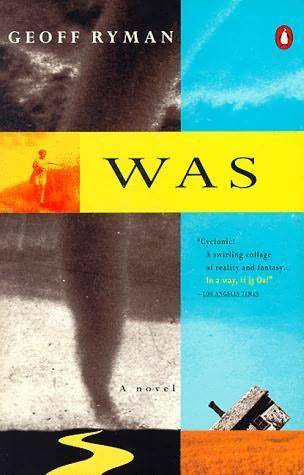
Geoff Ryman
Was
This is the use of memory:
For liberation-not less of love but expanding
Of love beyond desire, and so liberation
From the future as well as the past. Thus, love of a country
Begins as attachment to our own field of action
And comes to find that action of little importance
Though never indifferent. History may be servitude,
History may be freedom.
– T.S. Eliot, Four Quartets
Part One. The Winter Kitchen
Manhattan, Kansas-September 1989
During the spring and summer I sometimes visited the small Norwegian Cemetery on a high hill overlooking a long view of the lower Republican Valley. In late evening a cool breeze always stirs the two pine trees which shade a few plots, just south of the Cemetery in a little ravine is a small pond surrounded with a few acres of unbroken prairie sod. On the rise beyond the ravine a few large trees grow around a field. They are the only markers of the original site of my Grandfather's homestead. My Grandmother once told me that when she stood on the hill and looked southwest all she could see was prairie grass. An aunt told me of walking over the hills to a Post Office on the creek there. I can remember when a house stood just across the field to the west and now I can still see an old tree and a lonely lilac bush on the next hill where a few years ago a house and farm building stood. Of the ten houses I could see from this hill when I was a child, now only two exist-but instead of the waving prairie grass which Grandmother saw in the 1870s, there are rectangles and squares of growing crops and trees along the roads. A few miles distant the dark green of trees, with a water tower, tall elevator and an alfalfa mill rising above them define the area of a small town.