Carlton led the way to where two researchers-a man and a woman-were crouched before a computer monitor. The pair stood so close together, both wearing white lab coats. They reminded Lorna of the conjoined monkeys, bonded at the hip just like Huey and Dewey.
“This is amazing,” Dr. Paul Trent announced and glanced over a shoulder as she reached them. He was young, thinly built, with wavy blond hair combed behind his ears, looking more like a California surfer than a leading neurobiologist.
Paul’s wife, Zoë, stood next to him. She was Hispanic. Her black hair was bobbed short-shorter than her husband’s-framing wide cheekbones, lightly freckled. Her lab coat did little to hide the generously curved body beneath.
The two were biologists from Stanford, wunderkinds in the field, earning their degrees before their mid-twenties and already well regarded professionally. They were in New Orleans on a two-year grant researching neural development in cloned animals, studying the structural differences between the brains of cloned specimens and their original subjects.
The pair of doctors certainly had come to the right place.
ACRES was one of the nation’s leading facilities involved with cloning. In 2003, they had been the first to clone a wild carnivore, an African cat named Ditteaux, pronounced Ditto for obvious reasons. And in the coming year, the facility was about to begin the commercial cloning of pets as a method to raise funds for their work with endangered species.
Zoë stepped back from the computer monitor. “Lorna, you have to see this.”
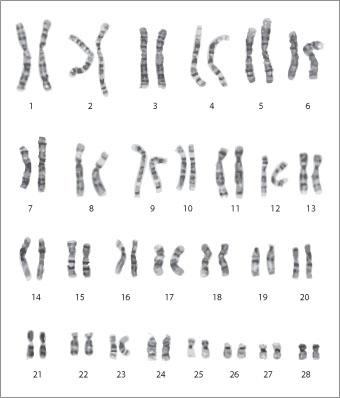
Lorna moved closer and recognized a karyogram on the screen. It showed a set of numbered chromosomes lined up into a chart.