
Anna Reid
LENINGRAD: The Epic Siege of World War II, 1941–1944
For Edward and Bertie


Introduction
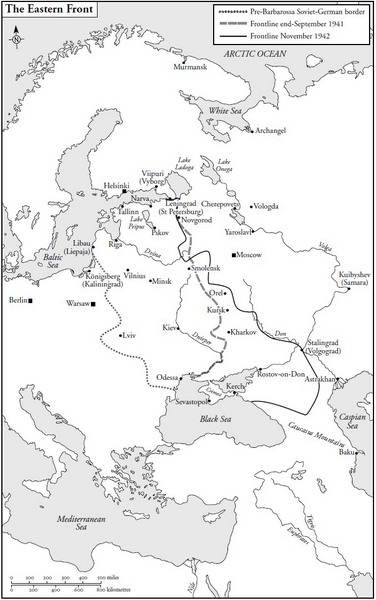
This is the story of the siege of Leningrad, the deadliest blockade of a city in human history. Leningrad sits at the north-eastern corner of the Baltic, at the head of the long, shallow gulf that divides the southern shores of Finland from those of northern Russia. Before the Russian Revolution it was the capital of the Russian Empire, and called St Petersburg after its founder, the tsar Peter the Great. With the fall of Communism twenty years ago it regained its old name, but for its older inhabitants it is Leningrad still, not so much for Lenin as in honour of the approximately three-quarters of a million civilians who starved to death during the almost nine hundred days — from September 1941 to January 1944 — during which the city was besieged by Nazi Germany. Other modern sieges — those of Madrid and Sarajevo — lasted longer, but none killed even a tenth as many people. Around thirty-five times more civilians died in Leningrad than in London’s Blitz; four times more than in the bombings of Nagasaki and Hiroshima put together.
On 22 June 1941, the midsummer morning on which Germany attacked the Soviet Union, Leningrad looked much the same as it had done before the Revolution. A seagull circling over the gilded needle of the Admiralty spire would have seen the same view as twenty-four years previously: below the choppy grey River Neva, lined by parks and palaces; to the west,