Автор - Andrei Makine

A Hero's Daughter
Автор: Andrei MakineЖанр: Иностранная литература
Early works of an author who has hit the big-time are often reissued for reasons more venal than literary. None of the pre- and post- publications of Tracy Chevalier come anywhere near the standard of The Girl with the Pearl Earring, but that didn't stop them being rushed into instant print once best-sellerdom was declared and the film came out.Andrei Makine gained international recognition only when his fourth novel, Le Testament Francais, won two prestigious prizes. Famously, the refugee from the Soviet Union who wrote in French hadn't been able to get his first novel published until he pretended it was translated from "the original Russian" by the mythical "Francoise Bour".It's a cute story, but why has that one, A Hero's Daughter, suddenly come out in English 14 years after publication? Are the translator and/or publishers jumping on a bandwagon in the light of later prizes awarded to them both?At 163 elegant pages, and featuring only two central characters – that is, "without the bewildering patronymics or the excessive length" of most Russian novels (a grab on the back cover) – A Hero's Daughter lightly realises huge moments in recent Russian history.Starting with the atrocious encounters between Germany and Russia in World War II, when existence was a frozen trench and the lads are kept going with vodka and blind loyalty ("For Stalin's sake it all made sense…"), it skips over 40 pretty good years to bring the eponymous hero into the '80s, the era of Gorbachev and perestroika.Life starts changing in ways incomprehensible to an old soldier, if 53 can be called old. Ivan feels old because he is a veteran, and because, by great good luck, he was made a Hero of the Soviet Union for simply surviving the Battle of Stalingrad. The real act of heroism that he did commit, no one ever saw. But Ivan has a precious Gold Star to prove the benevolent idiocy of the authorities, and he will never sell it, not even to numb his misery with vodka after his wife dies in their backwoods village, when life holds nothing for him.Well, not nothing. Although their son died, Ivan and Tatyana had a daughter, Olya, a model child who studied hard and went away to Moscow to become a translator. By now, Western snouts are poking greedily into Russian troughs and there is plenty of work for a girl who knows a language or two. And who is prepared to go the extra mile – the businessmen staying in the huge hotels expect more than mere translation. The valuta they pay for services rendered means that Olya can shop at the Beriozki shops for luxury goods only available in Western currency.Deep down she doesn't approve of this lifestyle, although perhaps it is justified by the small-time espionage she can engage in while her drugged clients are snoring. It all makes sense for the New Russia's sake. Though it would kill her father if he were to find out. She'd drop it all anyway, the moment she found a nice boy to marry.While Olya is ambivalent about her compromises, Ivan gets some real shocks. For the first time he is no longer trotted out to speak to local schoolchildren about his role in the great battle; and in Moscow one of his old mates spills the beans on what translators really do. Ivan gets drunk and goes berserk. The damage he does in a Beriozka becomes a radio news item, and grounds for Olya's rich Russian "fiance" to give her the flick, even though she's just survived an abortion with complications. All she wants to do is to shuck off her sordid life and take her father back to the village, where she can look after them both. Unfortunately, he dies suddenly of a heart attack. Olya sleeps with a man one last time, in order to raise the money for the coffin – flogging the Gold Star doesn't do it.The stories of Ivan and Olya are truly tough, but strangely uplifting. Life in the Soviet Union was never easy, and whatever benefits rampant capitalism might be about to provide lie outside the novel's time-frame.Meanwhile, the penury, shortages and brutal hardship that drive ordinary citizens to alcoholism and prostitution are countered by some kind of irreducible humanity. Olya emerges as an innately good girl who will one day find her proper level; Ivan is moved by an untutored morality based on vague but sound instincts. Their friends are all pals to them and to each other.The human face of Soviet society may have been covered with warts, but virtue of a sort shone out of it, as it also does from this deceptively slight, excellently translated, and deeply involving first novel.
О книге
Au temps du fleuve Amour
Автор: Andrei MakineЖанр: Иностранная литература
Andreï Makine ouvre son roman sur une scène rêvée de notre Occident. Un fantasme qui nous fera mesurer l'étendue de notre dépaysement. Les personnages appartiennent à un autre monde: le pays du grand blanc, au bord du fleuve Amour. Dans ces lieux de silence, la vie pourrait se confondre avec de simples battements de coeur si chaque mouvement de l'âme n'apportait sa révélation. Alors, le désir naît, de la sensualité des corps comme de la communion avec la nature offerte. L'amour a l'odeur des neiges vierges dans la profondeur de la taïga. Soudain, tout est bouleversé. L'Occident fait signe. D'abord un train qui passe, le mythique Transsibérien. Puis un film français, vision d'une existence éblouissante, appel peuplé de grandes actions et de créatures sublimes. Le vertige d'une autre histoire née sur les rives du fleuve Amour, aux berges de l'adolescence.
О книге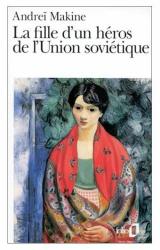
La fille d'un héros de l'Union soviétique
Автор: Andrei MakineЖанр: Иностранная литература
"Il semblait que le monde allait tressaillir et qu'une fête sans fin allait commencer ici et sur la terre entière".Olia est née, un jour de novembre, dans cette atmosphère de liesse de l'après-guerre où tout paraît possible. Mais les rêves que construit Ivan, le héros décoré de l'Étoile d'or de l'Union soviétique, à la naissance de sa fille ne sont qu'illusions.Dans ce premier roman, Andreï Makine brosse le portrait d'une génération perdue, dans une langue superbe de vérité.
О книге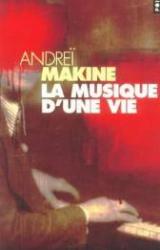
La musique d'une vie
Автор: Andrei MakineЖанр: Иностранная литература
«Je m'éveille, j'ai rêvé d'une musique.» – Andreï Makine «Un très beau roman d'une écriture épurée qui vise l'émotion et touche au cœur.» – L'Express Au cœur de la tempête, dans l'immensité blanche de l'Oural, des voyageurs transis attendent un train qui ne vient pas. Alors que s'étire cette nuit sans fin, un vieux pianiste remonte le fil de son histoire, des prémices d'une grande carrière au traumatisme de la guerre. Guidés par une musique intérieure, les souvenirs d'Alexeï nous révèlent la force indomptable de l'esprit russe. Une ville, une gare, sur "une planète blanche, inhabitée". Une ville de l'Oural, mais peu importe. Dans le hall de la gare, une masse informe de corps allongés, moulés dans la même patience depuis des jours, des semaines d'attente. Puis un train, sorti du brouillard, qui s'ébranle enfin vers Moscou. Dans le dernier wagon, un pianiste raconte au narrateur la musique de son existence. Exemple parfait, elle aussi, de "l'homo sovieticus", de "sa résignation, son oubli inné du confort, son endurance face à l'absurde". Pour le pianiste s'ajoute à cela la guerre. La guerre qui joue avec les identités des hommes, s'amusent parfois à les intervertir, les salir aussi, les condamner: à la solitude, à l'exil, au silence, la pire des sentences pour un musicien. Mais rien – pas même la guerre – ne parvient à bâillonner tout à fait les musiques qui composent la vie d'Alexeï, celles qui n'ont cessé, sans qu'il le sache, d'avancer à travers sa nuit, de "respirer sa transparence fragile faite d'infinies facettes de glace, de feuilles, de vent". Celles qui le conduisent au-delà du mal, de l'angoisse et du remords. À la suite du Testament français triplement couronné en 1995 par les prix Goncourt, Médicis et Goncourt des lycéens, Andreï Makine poursuit le portrait intraitable de sa Russie natale à travers une langue toujours plus fervente et inspirée. -Laure Anciel -Ce texte fait référence à une édition épuisée ou non disponible de ce titre. «L'idéal du roman, c'est qu'on ne puisse rien en dire, seulement y entrer, y demeurer dans la contemplation et s'en trouver transfiguré. Ce n'est pas pour bouger l'air, se dégourdir le style que les Russes écrivent» explique Andréï Makine dans le dernier numéro de Lire. Makine écrit donc pour dire quelque chose, il s'inscrit ainsi dans la grande lignée des auteurs russes pour lesquels littérature et philosophie se conjuguent à l'unisson. Dans La musique d'une vie, il fait surgir d'une foule endormie au fond d'une gare de Sibérie, un destin. Celui d'Alexis Berg, jeune pianiste dont la vie se brise un soir de 1941. Contraint de fuir son premier concert en raison des purges staliniennes, Alexis se réfugie en Ukraine avant de prendre une fausse identité. Il deviendra plus tard chauffeur d'un haut dignitaire de l'armée, contraint de fuir son identité pour ne pas dévoiler celle qu'il s'est appropriée. Dans ce roman à l'écriture lumineuse, Andréï Makine donne chair aux oubliés de l'histoire soviétique. Ni héros de l'armée rouge, ni dissidents, ni prisonniers, simplement figures ordinaires du peuple russe. Derrière ses mots, on sent comme les sanglots ravalés de milliers d'existences détruites par le régime. Des vies dont les promesses n'ont pas été tenues, mais qui ont survécu à tout: aux purges, à la guerre, à l'administration débilitante du régime. Un roman que Makine portait en lui depuis quinze ans, écrit dans une langue limpide mais retenue, comme pour mieux suggérer des émotions trop fortes pour être décrites. 127 pages qui rendent justice à cet «Homo sovieticus» trop longtemps noyé dans la masse informe du peuple.
О книге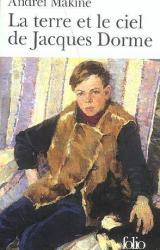
La terre et le ciel de Jacques Dorme
Автор: Andrei MakineЖанр: Иностранная литература
Andreï Makine: " L'écriture est une vision "«C'est alors que, d'une voix presque éteinte, en acceptant l'échec et ne demandant plus rien, je parlai de Jacques Dorme. Je réussis à dire sa vie en quelques phrases brèves, nues. Je me trouvais dans un état d'abattement tel que j'entendais à peine ce que je disais. Et c'est dans cet état seulement que je fus capable d'exprimer toute la douloureuse vérité de cette vie. Un aviateur venu d'un pays lointain rencontre une femme du même pays et, pendant très peu de jours, dans une ville dont il ne restera bientôt que des ruines, ils s'aiment; puis il part au bout de la terre pour conduire les avions destinés au front, et meurt, en s'écrasant sur un versant de glace, sous le ciel blême du cercle polaire. Je l'avais dit autrement. Non pas mieux, mais plus brièvement encore, plus près de l'essence de leur amour.»
О книге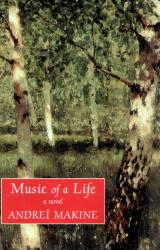
Music of a Life
Автор: Andrei MakineЖанр: Иностранная литература
A superb new novel by the author of Dreams of My Russian Summersand Requiem for a Lost Empire,set in the period just before, and two decades after, World War II.“Makine is without doubt one of the greatest living writers. Music of a Life proves it.” -Le Figaro( France)A brief but extraordinarily powerful novel by the author of Dreams of My Russian Summersand Requiem for a Lost Empire, Music of a Lifeis set in the period just before, and two decades after, World War II.Alexeï Berg’s father is a well-known dramatist, his mother a famous opera singer. But during Stalin’s reign of terror in the 1930s they, like millions of other Russians, come under attack for their presumed lack of political purity. Harassed and proscribed, they have nonetheless, on the eve of Hitler’s war, not yet been arrested. And young Alexeï himself, a budding classical pianist, has been allowed to continue his musical studies. His first solo concert is scheduled for May 24, 1941.Two days before the concert, on his way home from his final rehearsal, he espies his parents being arrested, taken from their Moscow apartment. Knowing his own arrest will not be far behind, Alexeï flees to the country house of his fiancée, where again betrayal awaits him. He flees, one step ahead of the dreaded secret police until, taking on the identity of a dead soldier, he enlists in the Soviet army. Thus begins his seemingly endless journey, through war and peace, until he lands, two decades later, in a snowbound train station in the Urals, where he relates his harrowing saga to the novel’s narrator.Music of a Lifehas been Andreï Makine’s biggest bestselling novel internationally since Dreams of My Russian Summers.It is, in the words of France’s most distinguished daily newspaper Le Monde,“extremely powerful… a gem.”
О книге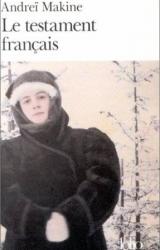
Le testament français
Автор: Andrei MakineЖанр: Иностранная литература
Ce roman a l’originalité de nous offrir de la France une vision mythique et lointaine, à travers les nombreux récits que Charlotte Lemonnier, «égarée dans l’immensité neigeuse de la Russie», raconte à son petit-fils et confident.Ce roman a reçu le prix Goncourt 1995 et ex-aequo le prix Médicis 1995.***«Je me souvenais qu'un jour, dans une plaisanterie sans gaîté, Charlotte m'avait dit qu'après tous ses voyages à travers l'immense Russie, venir à pied jusqu'en France n'aurait pour elle rien d'impossible […]. Au début, pendant de longs mois de misère et d'errances, mon rêve fou ressemblerait de près à cette bravade. J'imaginerais une femme vêtue de noir qui, aux toutes premières heures d'une matinée d'hiver sombre, entrerait dans une petite ville frontalière […]. Elle pousserait la porte d'un café au coin d'une étroite place endormie, s'installerait près de la fenêtre, à côté d'un calorifère. La patronne lui apporterait une tasse de thé. Et en regardant, derrière la vitre, la face tranquille des maisons à colombages, la femme murmurerait tout bas: "C'est la France… Je suis retournée en France. Après… après toute une vie."»
О книге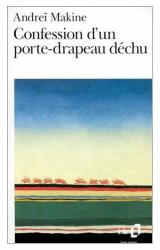
Confession d'un porte-drapeau déchu
Автор: Andrei MakineЖанр: Иностранная литература
Émigré à Paris, Kim s'adresse à son ami d'enfance, Arkadi. Avant d'être séparés à l'âge de quatorze ans, les deux garçons ont grandi ensemble dans un hameau communautaire, non loin de Leningrad. Kim et Arkadi vivent des années heureuses. Tous deux pionniers dans un mouvement de jeunesse, ils marchent fièrement vers l'horizon radieux que leur promettent les films de propagande, au rythme des chants qui célèbrent les héros de la guerre et la figure mythique du Travailleur. Mais certains silences des parents sont lourds de sous-entendus. Peu à peu émerge en eux le sentiment qu'on les dupe. Et pour l'adulte aux yeux depuis longtemps dessillés, la nostalgie est double: à celle des scènes de l'enfance que la mémoire baigne d'une lumière neigeuse, vient s'ajouter celle, plus inattendue, de l'époque du mensonge et de l'aveuglement.
О книге
Dreams Of My Russian Summers
Автор: Andrei MakineЖанр: Иностранная литература
In an era when everything is an event, and nothing just happens naturally, it's hard not to be suspicious of the a novel that is the first ever to win both the Prix Goncourt and the Prix Medicis, by a Russian émigré who has been compared to Nabokov, Pasternak, and Proust. Add in the fact, repeated in the novel, though apparently true, that after being turned away by French publishers, the author pretended to be only the translator of the novel, and that it was then published, and you've got a book that can't possibly live up to the hype that precedes it.Makine, who fled the Soviet Union in 1987 when he was thirty, tells the semi-autobiographical tale of a young man who, along with his sister, spends summers in Siberia with his French grandmother, Charlotte Lemonnier. Trapped there after the death of her Russian husband, Charlotte shares a world of memory with the children, memory of France prior to WWII. In the intensely paranoid world of Soviet Communism, Charlotte 's very Frenchness is deeply suspicious to her neighbors and the authorities.The boy grows up loving his grandmother and the idyllic world she summons, but torn between this Francophilia and a youngster's need to conform and embrace his Russian side. In his mind, the Russian aspect of his character comes to represent a kind of barbarism and a capacity for brutality, while the French aspect represents a gauzy humanism and a love of beauty. It is this sense that shows him that it is right for the Soviets to fear their Frenchness:I became aware of a disconcerting truth: to harbor this distant past within oneself, to let one's soul live in this legendary Atlantis, was not guiltless. No, it was well and truly a challenge, a provocation in the eyes of those who lived in the present.Here in the West, it is blithely assumed that humanism and the good reside exclusively in the souls of progressives. For Makine, and his narrator, precisely the opposite is true; in the East, at that time, it was necessary to look backwards to find values and a culture which exalted human being, while the progressives of the Soviet Union did all they could to extinguish them.Memory is so personal that it's not too surprising that Makine's narrative sometimes seems overly diffuse and obscure. He lays on the Proust and Nabokov parallels a tad too heavily at times-a few less references to cork-lined rooms and moths wouldn't hurt; we get the message. And I'm sufficiently Francophobic to find it amusing, rather than touching, that someone recalls France with such a golden glow. But the lyricism of the writing, some memorable images, and the way the story implicates the tragedy of 20th Century Russia earn the book a qualified recommendation.
О книге
Once Upon The River Love
Автор: Andrei MakineЖанр: Иностранная литература
A novel of love and growing up by Andreï Makine, whose bestselling Dreams of My Russian Summerswas hailed by the Los Angeles Timesas one of the "best autobiographical books of the century."In the immense virgin pine forests of Siberia, where the snows of winter are vast and endless, sits the little village of Svetlaya. In the early years of the century the village had been larger, more prosperous, but time and the pendulum of history had reduced it by the 1970s to no more than a cluster of izbas. As wars and revolution had succeeded one another, the men had gone away, never to return, the women reduced to dressing in black.But for three young men-the handsome young Alyosha, the crippled Utkin, and the older, dashing Samurai-little is needed to construct their own special universe. Despite the harshness of the environment and their meager resources, the three adolescents form a tight band of friendship and dream of another life, a world of passion and love. The warm lights of the Transsiberian train passing through give them fleeting glimpses of that other world. And when they learn one day that a Western film is being shown at the Red October Theatre in the closest real city, Nerlug, twenty miles away on the mighty Amur River, they trek for hours on snowshoes to see it. Through that film, starring the French actor Jean-Paul Belmondo and replete with gorgeous women whom he succeeds in seducing one after the other with consummate ease, the boys' lives are changed forever. Over the next several months they travel seventeen times to see their hero. And when that film is replaced by another that is equally daring and seductive, their obsession only grows.Written from the perspective of twenty years after these youthful events, Once Upon the River Lovefollows the destinies of these three young idealists up to the present day, to the boardwalks of Brighton Beach and the jungles of Central America.With the same mastery of plot and prose that marked the author's Dreams of My Russian Summers,this novel demonstrates Andreï Makine's remarkable ability to recreate the past with such precision and beauty that the present becomes all the more poignant and moving.Once Upon the River Loveoffers further proof that Andreï Makine is one of the major literary talents of our time.
О книге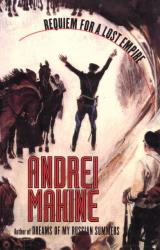
Requiem For A Lost Empire
Автор: Andrei MakineЖанр: Иностранная литература
In Makine's fifth novel, the memories of an unnamed narrator weave through the 20th century as he recalls episodes in the life of his family-experiences that include those of a battlefield doctor in Afghanistan who was also a KGB agent, a Russian villager who defied the Soviet regime, and a man who swears to avenge the death of his beloved.This luminous, beautifully crafted new novel by much-praised Russian ‚migr‚ author Makine (Dreams of My Russian Summers, etc.) takes as its subject three generations of a Russian family, caught in the violent political struggles of the 20th century. The novel begins after the Russian revolution, when Pavel, a Russian farmer, refuses to comply with the demands of Stalin's government. The novel then jumps to late-20th-century Russia, where Pavel's son is swept into a murderous web of KGB espionage, falls in love and then loses his lover in the maelstrom of historical change. When he next hears of her, she has been murdered. The novel gradually becomes a tale of revenge, as the spy goes to Florida to find his lover's killer. The outcome, however, is not what he expects. Shortly after the novel introduces Pavel's son, we learn the story of Pavel's father, a deserter from the Red Army, followed by the story of Pavel himself. Each temporal leap the novel makes illuminates and defines its crucial events, rather than muddying the waters. Makine writes lyrically, baring his struggling characters' emotions and vivifying their oft-chaotic backdrops with equal brio. As the young spy's friends and family disappear from his life, his memories become the only things left for him; Makine renders these in brilliantly sharp detail. The arc of the novel shows, above all, that life patterns repeat themselves; we watch the same conflicts playing themselves out in the three life stories presented here. Throughout, Makine displays the sensitivity and honesty of his acclaimed previous works. Agent, Georges Borchardt. (Aug.)Forecast: Makine shows impressive staying power with this fifth novel to be published in English translation, and Arcade is demonstrating its faith with a first printing of 25,000 copies. Chances are good that the writer's reader base will continue to grow steadily.
О книге
Requiem pour l'Est
Автор: Andrei MakineЖанр: Иностранная литература
Je me savais a present incapable de dire la verite de notre temps. Je n'etais ni un temoin objectif, ni un historien, ni surtout un sage moraliste. Je pouvais tout simplement reprendre ce recit interrompu alors par la nuit, par les routes qui nous attendaient, par les nouvelles guerres.» Un medecin militaire, engage par les services de renseignements sovietiques, retrace l'hallucinant destin de son grand-pere Nikolai et de son pere Pavel, les oppressions des annees 20, les purges, les violences nazies et la Seconde Guerre mondiale… Un chant pour les morts d'hier et aujourd'hui, une tragedie jalonnee de crimes, de viols et d'illusions perdues.***Complexe, la trame chronologique de cette fresque romanesque nous mène de la Russie des Rouges et des Blancs à la Floride en passant par l'Angola, I'Afghanistan, le Nicaragua… Le narrateur est un médecin militaire engagé par les services de renseignement soviétiques. Il a mission de recueillir des informations dans les pays où se cristallisent les tensions entre Américains et Russes, et de démanteler des réseaux de vente d'armes. L'Est dont Makine entonne le requiem est "cet écrasant empire, cette tour de Babel cimentée de rêves et de sang" qui s'est désagrégée, transformant ses "perspectives en impasses" et son Kremlin en "une grosse tumeur mafieuse dont les métastases minent le pays tout entier". L'écrivain charrie de concert la dénonciation politique (tirades contre le jeu pervers des puissances pour lesquelles la soif de pétrole et d'or compte plus que la vie des populations), le cri humanitaire, l'évocation des oppressions dont a souffert sa terre natale, et le roman d'espionnage.
О книге