Автор - Don DeLillo

The Names
Автор: Don DeLilloЖанр: Иностранная литература
Set against the backdrop of a lush and exotic Greece, The Names is considered the book which began to drive "sharply upward the size of his readership" (Los Angeles Times Book Review). Among the cast of DeLillo's bizarre yet fully realized characters in The Names are Kathryn, the narrator's estranged wife; their son, the six-year-old novelist; Owen, the scientist; and the neurotic narrator obsessed with his own neuroses. A thriller, a mystery, and still a moving examination of family, loss, and the amorphous and magical potential of language itself, The Names stands with any of DeLillo's more recent and highly acclaimed works.***"The Names not only accurately reflects a portion of our contemporary world but, more importantly, creates an original world of its own."-Chicago Sun-Times***"DeLillo sifts experience through simultaneous grids of science and poetry, analysis and clear sight, to make a high-wire prose that is voluptuously stark."-Village Voice Literary Supplement***"DeLillo verbally examines every state of consciousness from eroticism to tourism, from the idea of America as conceived by the rest of the world to the idea of the rest of the world as conceived by America, from mysticism to fanaticism."-New York Times
О книге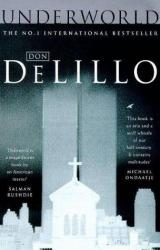
Underworld
Автор: Don DeLilloЖанр: Иностранная литература
Amazon.com ReviewWhile Eisenstein documented the forces of totalitarianism and Stalinism upon the faces of the Russian peoples, DeLillo offers a stunning, at times overwhelming, document of the twin forces of the cold war and American culture, compelling that "swerve from evenness" in which he finds events and people both wondrous and horrifying. Underworld opens with a breathlessly graceful prologue set during the final game of the Giants-Dodgers pennant race in 1951. Written in what DeLillo calls "super-omniscience" the sentences sweep from young Cotter Martin as he jumps the gate to the press box, soars over the radio waves, runs out to the diamond, slides in on a fast ball, pops into the stands where J. Edgar Hoover is sitting with a drunken Jackie Gleason and a splenetic Frank Sinatra, and learns of the Soviet Union's second detonation of a nuclear bomb. It's an absolutely thrilling literary moment. When Bobby Thomson hits Branca's pitch into the outstretched hand of Cotter-the "shot heard around the world"-and Jackie Gleason pukes on Sinatra's shoes, the events of the next few decades are set in motion, all threaded together by the baseball as it passes from hand to hand."It's all falling indelibly into the past," writes DeLillo, a past that he carefully recalls and reconstructs with acute grace. Jump from Giants Stadium to the Nevada desert in 1992, where Nick Shay, who now owns the baseball, reunites with the artist Kara Sax. They had been brief and unlikely lovers 40 years before, and it is largely through the events, spinoffs, and coincidental encounters of their pasts that DeLillo filters the Cold War experience. He believes that "global events may alter how we live in the smallest ways," and as the book steps back in time to 1951, over the following 800-odd pages, we see just how those events alter lives. This reverse narrative allows the author to strip away the detritus of history and pop culture until we get to the story's pure elements: the bomb, the baseball, and the Bronx. In an epilogue as breathless and stunning as the prologue, DeLillo fast-forwards to a near future in which ruthless capitalism, the Internet, and a new, hushed faith have replaced the Cold War's blend of dread and euphoria.Through fragments and interlaced stories-including those of highway killers, artists, celebrities, conspiracists, gangsters, nuns, and sundry others-DeLillo creates a fragile web of connected experience, a communal Zeitgeist that encompasses the messy whole of five decades of American life, wonderfully distilled.***Starting with a 1951 baseball game and ending with the Internet, "Underworld" is not a book for the faint-hearted. Elegiac in tone and described variously as DeLillo's Magnum Opus and his attempt to write the Great American Novel, the book weighs in at a hefty 827 pages and zips back and forwards in time, moving in and out of the lives of a plethora of different characters.Following three main themes – the fate of a baseball from the winning game of the 1951 world series, the threat of atomic warfare and the mountains of garbage created by modern society – DeLillo moves forwards and backwards through the decades, introducing characters and situations and gradually showing the way their lives are interconnected.Reading the prose can be uncannily like using a web browser: the narrative focus moves from character to character almost as quickly as we are introduced to them, and the time frame regularly changes to show further connections between the key players. This device – literature as hypertext – is particularly effective in the early parts of the novel and the technique never intrudes on the story itself.The book focuses on Nick Shay, a former hoodlum who now works in the burgeoning waste management industry and owns the baseball from the 1951 game, "the shot heard around the world". In addition to Nick we hear from Frank Sinatra, J. Edgar Hoover, Lenny Bruce and the various people who move in and out of Nick's life: lovers, family, friends and colleagues. Through these seemingly disconnected narratives DeLillo paints a picture of Cold War paranoia at its peak – the baseball game happened the same day as the USSR 's first nuclear test – and the changes affecting his characters as a microcosm of American society as a whole.Very few writers, however, can justify over 800 densely-printed pages to tell a story and "Underworld" would have benefited greatly from judicious wielding of the blue pencil. Potentially intriguing plots which feature strongly in the earlier parts of the book – an intriguing serial killer subplot, the stories of each person who possesses the winning baseball – are abandoned halfway through the book in favour of overlong childhood memories or the inane ponderings of a performance artist; other stories are neglected for over 400 pages before reappearing at the end of the novel, causing an unwelcome jolt as the reader tries to remember the pertinent details.In this respect "Underworld" is a victim of its own ambition: by trying to cover such a wide range of characters and situations, DeLillo loses track of some of them and, in the latter parts of the novel in particular, the writing feels as if it is on autopilot while the author works out what to do next.There is still much to recommend in "Underworld", however. Each vignette is lovingly crafted: DeLillo seems as comfortable writing from the perspective of a street missionary as he is inhabiting J Edgar Hoover's paranoia. The book employs vivid imagery, from painted angels on ghetto walls to the cityscape created by mountains of domestic waste, and the dialogue is usually well-observed and thoroughly believable although it does flag when describing Nick Shay's hoodlum past. Despite its faults DeLillo has created an ambitious and powerful novel which, due to its size, can also be used to swat annoying children on trains. Highly recommended.Gary Marshall
О книге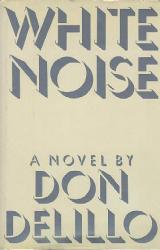
White Noise
Автор: Don DeLilloЖанр: Иностранная литература
Amazon.com ReviewBetter than any book I can think of, White Noise captures the particular strangeness of life in a time where humankind has finally learned enough to kill itself. Naturally, it's a terribly funny book, and the prose is as beautiful as a sunset through a particulate-filled sky. Nice-guy narrator Jack Gladney teaches Hitler Studies at a small college. His wife may be taking a drug that removes fear, and one day a nearby chemical plant accidentally releases a cloud of gas that may be poisonous. Writing before Bhopal and Prozac entered the popular lexicon, DeLillo produced a work so closely tuned into its time that it tells the future.From Publishers WeeklyChairman of the department of Hitler studies at a Midwestern college, Jack Gladney is accidently exposed to a cloud of noxious chemicals, part of a world of the future that is doomed because of misused technology, artifical products and foods, and overpopulation. PW appreciated DeLillo's "bleak, ironic" vision, calling it "not so much a tragic view of history as a macabre one."
О книге